
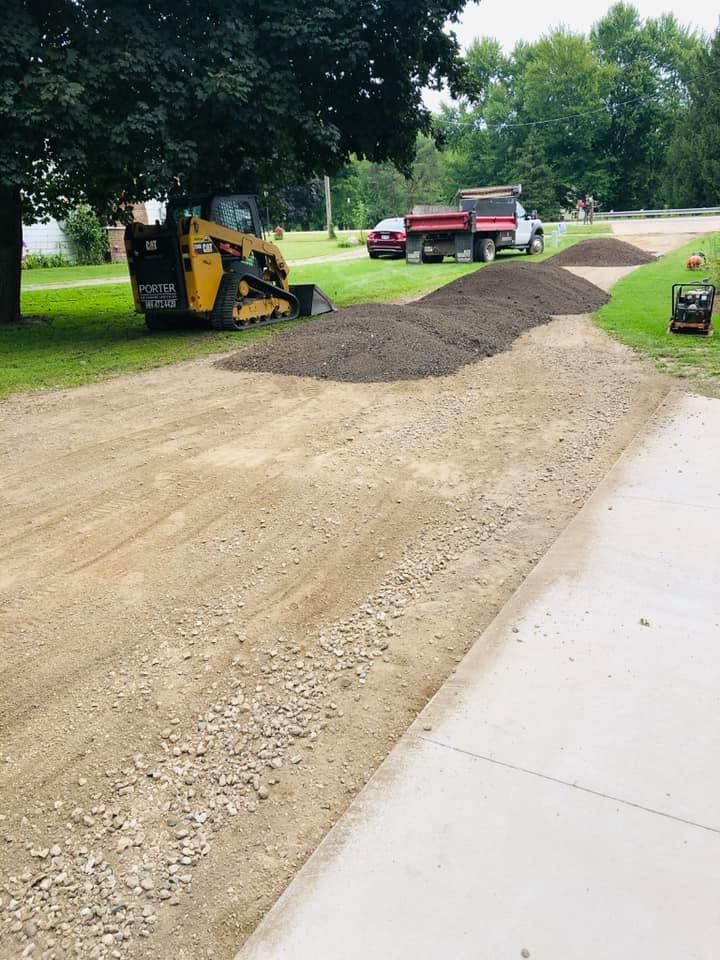
Raw Land Transformed Into Buildable Sites
Land Clearing and Grading in Owosso for new construction preparation, property expansions, and drainage improvement on uneven terrain
Uneven land covered with brush, trees, and surface debris can't support construction or landscaping until vegetation gets removed and grade gets established. Porter Outdoor Services provides land clearing and grading that transforms raw acreage into usable building sites, addresses drainage problems on properties with poor slope, and prepares land for large-scale improvements. The work involves removing everything from small brush to mature trees, then shaping terrain to create level building areas and direct water away from structures.
Clearing removes vegetation down to bare soil, pulls stumps to prevent future settling, and hauls debris off-site or processes it into mulch depending on material volume and client preference. Grading follows clearing and involves cutting high spots, filling low areas, and establishing slopes that prevent standing water while creating stable surfaces for construction. Finish grading brings elevations to exact specifications needed for foundations, driveways, and landscaping features.
Schedule a land evaluation to assess clearing requirements and grading solutions for your property.
What You Notice Once Land Clearing Is Finished
The clearing process begins with evaluating which trees and vegetation must go versus what can stay, then proceeds systematically through the work area using equipment matched to vegetation density and terrain access. Brush gets mulched or removed whole, trees are felled directionally to avoid damage outside the clearing zone, and stumps are ground below grade or pulled completely depending on what's being built. Grading equipment follows to smooth the cleared area and establish drainage patterns that Michigan's freeze-thaw cycles and seasonal rainfall won't undermine.
After completion, you'll see bare land with defined elevations, no standing water after rainstorms, and clear sight lines across the property. Slopes direct runoff toward designated drainage areas rather than toward building sites, and the surface is compacted enough to support equipment traffic without rutting. Areas designated for structures sit level within tolerance, while transitional zones feature gradual slopes that prevent erosion and allow for future landscaping.
Land clearing projects vary based on vegetation density, terrain steepness, and how much grading is needed to make the site functional. Properties with heavy clay soils require different grading approaches than sandy ground—clay needs careful moisture management to achieve proper compaction, while sandy soils drain quickly but may need stabilization on steep slopes. Some projects include topsoil stripping and stockpiling so organic material can be redistributed after rough grading establishes the base contours.
Property owners preparing land for development want to understand what the clearing and grading process involves and how site conditions affect the approach.
Common Questions About This Service
What happens to cleared trees and debris?
Material can be hauled to disposal facilities, chipped into mulch for on-site use or removal, or processed into firewood if timber quality warrants. Stump grinding reduces stumps to wood chips that decompose in place, while complete stump removal leaves clean fill areas.
How do you determine the right grade for drainage?
Proper grading creates slopes between two and five percent in most areas—enough to move water without causing erosion. Site evaluation identifies natural drainage paths and low spots where water collects, then grading redirects flow away from structures and toward appropriate discharge points.
When is the best time to clear land in Michigan?
Late fall through early spring offers advantages since frozen ground supports heavy equipment without soil compaction damage, and vegetation is dormant. Summer and early fall work fine if ground conditions are dry, but wet periods require waiting until soil firms up.
What site access do you need for clearing equipment?
Equipment requires access paths wide enough for machines that may span twelve feet, with overhead clearance for excavator booms and sufficient turning radius. Narrow or obstructed access sometimes necessitates smaller equipment, which affects project duration and cost.
How does rough grading differ from finish grading in land clearing projects?
Rough grading establishes major contours and gets the site close to final elevations, typically within a few inches. Finish grading fine-tunes surfaces to exact specifications for construction, achieving tight tolerances needed for concrete pours, paver installation, or seeding.
Porter Outdoor Services combines clearing and grading expertise with understanding of how Owosso terrain and soil behave under different conditions. Contact us to arrange a property visit and discuss your land preparation needs.