
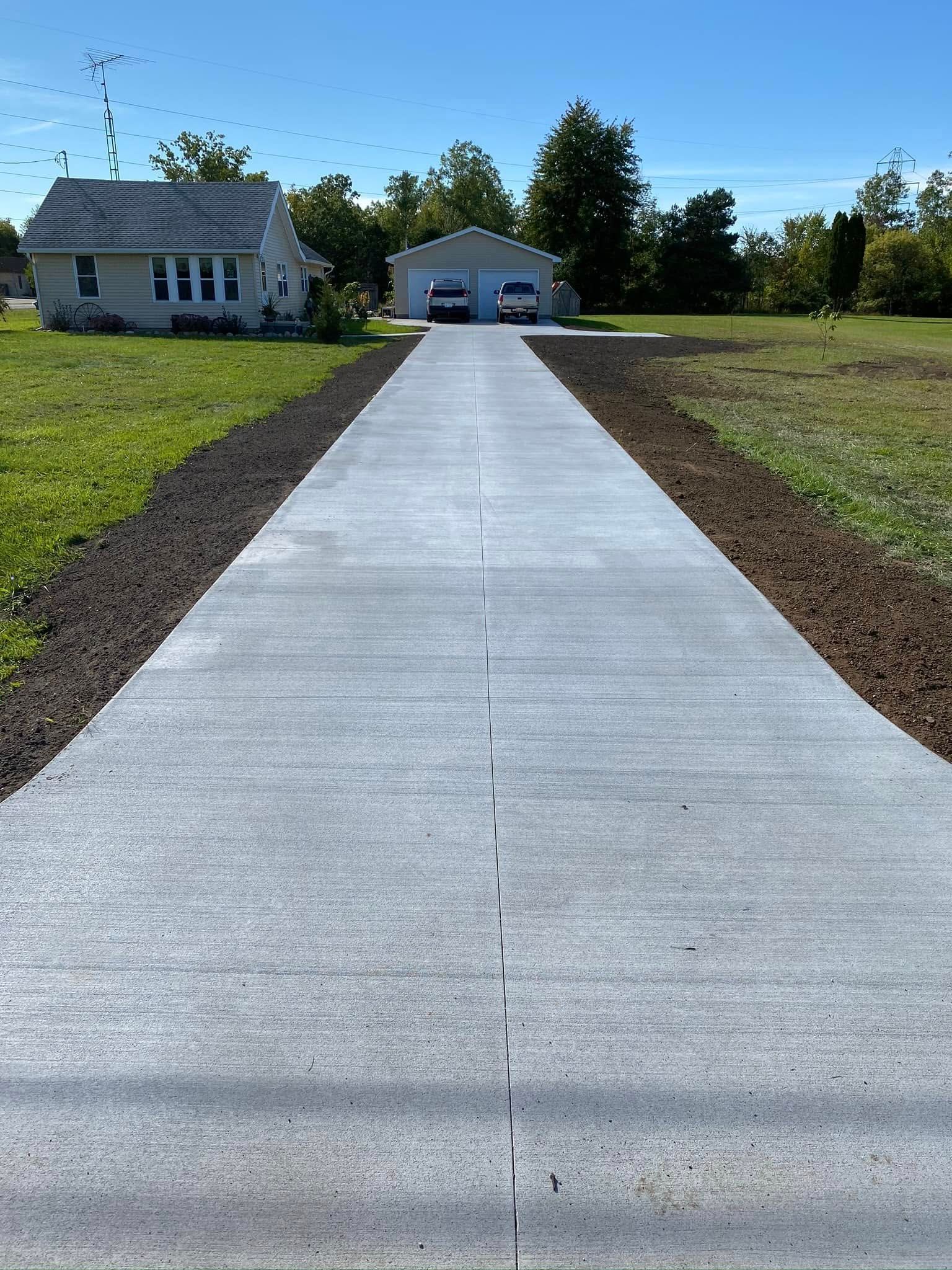
Access Routes Built for Seasonal Weather
Driveway Installation and Grading in Owosso for improved property access, water runoff management, and long-lasting durable surfaces
Driveways that handle Michigan freeze-thaw cycles, spring mud season, and winter plowing require proper base preparation and grading that accounts for soil type and drainage. Uneven driveways develop ruts and potholes where water pools and freeze-thaw action breaks down material, while poorly graded approaches trap runoff and deteriorate rapidly. This service addresses driveway installation for new construction and rural properties, regrading existing drives that have failed, and improving water management to extend surface life.
Installation involves excavating to stable subgrade, building up base layers of compacted aggregate that distribute load and promote drainage, and establishing crown or cross-slope that sheds water off the driving surface. Porter Outdoor Services works with gravel surfacing and base preparation that creates driveways capable of supporting vehicle traffic year-round without rutting or washout. Regrading projects restore proper drainage to existing drives and add material where surfaces have degraded.
Request a driveway evaluation to identify base conditions and grading improvements needed for your access route.
Why Proper Base Preparation Works for Michigan Conditions
Driveway longevity depends on subsurface layers more than surface material—inadequate base leads to settling, rutting, and rapid deterioration regardless of what goes on top. The process begins by removing unsuitable material like topsoil or organic matter that compresses under load, then building up with compacted aggregate in lifts that create a stable platform. Base depth varies with soil type and expected traffic—typical residential driveways need eight to twelve inches of compacted stone over stable subgrade, while clay soils or heavy use may require deeper sections. Compaction happens incrementally as each layer goes down, not after the full depth is placed.
After proper installation, your driveway sheds water toward edges rather than pooling in the center, remains firm during spring thaw when surrounding ground turns soft, and resists rutting where vehicles turn or brake. The surface maintains its shape through freeze-thaw cycles because subsurface drainage prevents ice lenses from forming in the base, and crowned or sloped grading keeps water moving off rather than soaking in. Driveways built this way require periodic material addition as surface gravel works into the base, but the structural integrity stays intact for years.
Grading specifications depend on driveway length and surrounding terrain—longer drives need intermediate drainage considerations, while steep approaches require grade breaks or water bars to prevent erosion during heavy runoff. The width accommodates vehicle wheelbase plus clearance for snow storage in winter, and turnaround areas get graded to prevent backing out onto roads. Some properties require culvert installation where driveways cross natural drainage paths or roadside ditches.
Property owners planning driveway work want to understand what makes installations last and how existing problems get corrected.
Questions Before Starting Your Project
What causes driveways to develop ruts and potholes?
Inadequate base depth, poor drainage that allows water infiltration, and insufficient compaction lead to material displacement under traffic. Freeze-thaw cycles worsen damage when water trapped in the base expands as ice, then leaves voids when it melts.
How do you grade driveways to prevent water damage?
Crown grading creates a slight peak along the centerline so water runs toward both edges, while cross-slope tilts the entire surface toward one side. Grade selection depends on driveway width and how surrounding terrain directs runoff. Proper slope is typically two to three percent—enough to move water without creating steep transitions.
What aggregate materials work best for driveway base and surface?
Crushed limestone or recycled concrete provides angular material that compacts tightly and interlocks for stability. Surface layers use slightly smaller stone that packs smooth while still allowing drainage, while base layers use larger aggregate for structural strength.
Can you repair driveways without complete reconstruction?
Regrading and adding material works when the base remains intact but surface has degraded or drainage has failed. Complete reconstruction becomes necessary when the base has failed, frost heave has disrupted the structure, or insufficient original depth causes ongoing problems.
How does seasonal timing affect driveway installation in Owosso?
Spring installation sometimes faces delays when ground is saturated and won't compact properly. Late summer through fall offers stable soil conditions, while frozen ground in winter prevents excavation and compaction. Projects scheduled for spring should plan for weather contingencies.
Porter Outdoor Services builds driveways with base preparation and drainage design that address conditions specific to mid-Michigan weather and soil. Contact us to evaluate your current driveway or discuss new installation requirements based on your property layout.